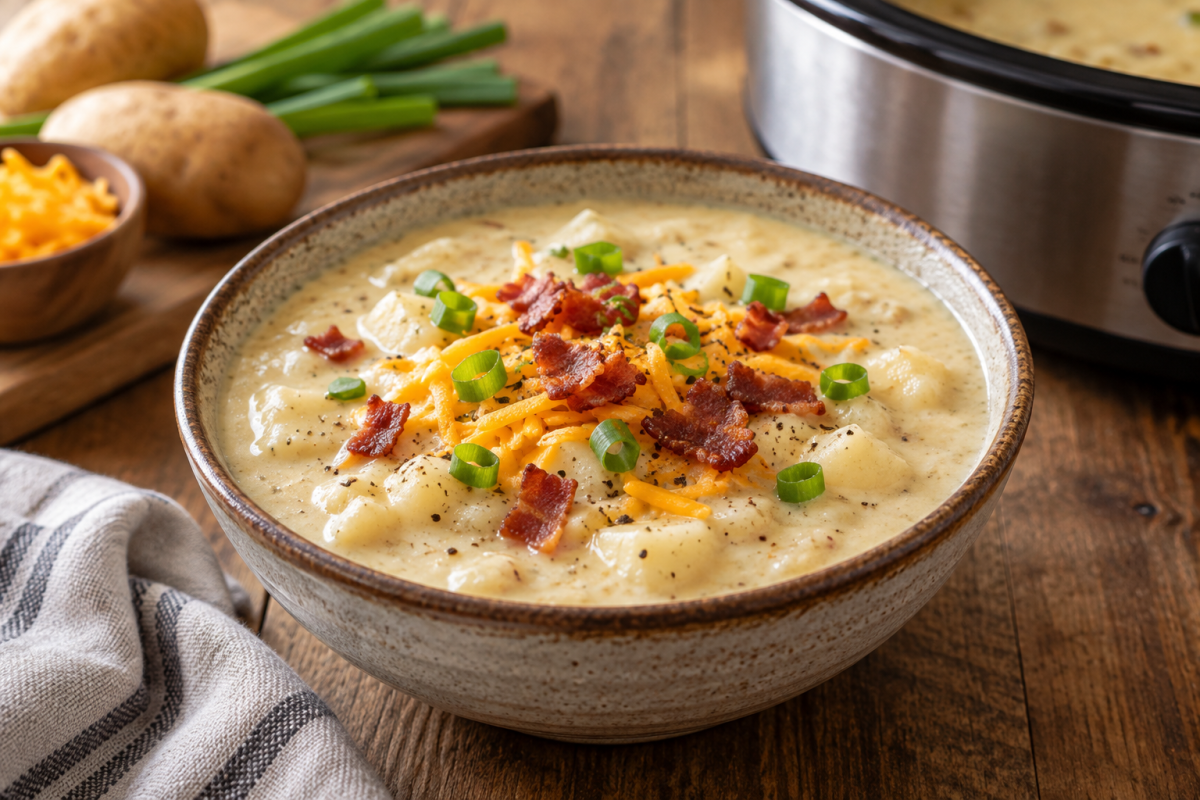

Crockpot potato soup with frozen hash browns replaces peeled and diced fresh potatoes with one bag of plain frozen diced potatoes. Cook the potatoes, onion, broth and seasonings until the largest cube crushes easily against the side of the cooker. Mash part of the soup, thicken it with a measured milk-and-cornstarch slurry, then add cheddar and sour cream on warm or with the heat off.
Why this slow-cooker method is useful
Frozen diced potatoes remove the peeling and most of the chopping from this soup. The recipe also avoids condensed cream soup. Its body comes from softened potato starch, a brief partial mash and a controlled cornstarch slurry.
Adding the dairy near the end matters. Cheddar can turn grainy and sour cream can separate when either is boiled for hours. Waiting until the potatoes are fully tender gives the base time to develop before the cheese and sour cream are folded in.
Ingredient notes
Frozen potatoes: Choose plain loose diced hash browns, sometimes called Southern-style hash browns. Do not use formed patties. Keep the potatoes frozen until the cooker is ready.
Broth: Low-sodium broth leaves room for the cheddar and late salt check. Chicken broth is the proposed default; low-sodium vegetable broth is the vegetarian option.
Cheddar: Freshly shredded sharp cheddar is the proposed choice. Pre-shredded cheese may contain anti-caking starches and may melt less smoothly.
Sour cream: Temper it with a ladleful of hot soup before stirring it into the cooker, and keep the finished soup below a hard simmer.
Doneness and texture cues
- The largest potato dice flatten with gentle spoon pressure and have no firm or icy center.
- The onion feels soft rather than crisp.
- Before the dairy is added, the base looks brothier than the final soup.
- After the slurry cooks, the liquid leaves a light film on the back of a spoon but still flows.
- The cheddar disappears into the soup without oily pools.
Substitutions and variations
Vegetarian: Use low-sodium vegetable broth and check that the cheese and sour cream suit the diner’s needs.
Greek yogurt: Full-fat plain Greek yogurt may replace the sour cream. Temper it first and expect a tangier finish. This variation needs its own texture test.
Fresh potatoes: Use 30 ounces / 850 g peeled or well-scrubbed Russet or Yukon Gold potatoes cut into 1/2-inch dice. Fresh potatoes may cook differently, so the timing remains provisional.
Shredded hash browns: Expect a smoother soup. Begin with 1 tablespoon cornstarch and add more only after observing the cooked texture.
Gluten awareness: The ingredient list contains no intentional wheat, but broth, cornstarch and frozen potatoes vary by brand. Check every label before describing a prepared serving as gluten-free.
Troubleshooting
The potatoes are still firm
Keep the cooker covered and continue on high in 20-minute increments. Do not add the dairy until the potatoes and onion are tender.
The soup is too thin
Mash another 1/2 cup of potatoes first. If needed, whisk 1 additional tablespoon cornstarch with 2 tablespoons cold milk, stir it in and cook on high for 15–20 minutes. Do not add dry cornstarch directly.
The soup is too thick
Stir in warm broth or milk 2 tablespoons at a time. Wait until each addition is fully mixed before adding more.
The cheese looks grainy or oily
Switch the cooker off, stop boiling and stir gently with a splash of warm milk. Add freshly shredded cheese in small handfuls during the initial preparation.
The soup tastes flat
Add salt only after the cheddar is incorporated. Black pepper, green onion or a small spoonful of sour cream can add contrast without oversalting the entire cooker.
Make-ahead, storage and reheating
An untested make-ahead option is to cook the potato base, cool it promptly, and add the slurry, cheese and sour cream during reheating. This may reduce dairy separation, but it remains a texture hypothesis until a real batch is checked.
Transfer leftovers to shallow covered containers and refrigerate within 2 hours. FoodSafety.gov lists soups and stews for 3–4 days refrigerated. Reheat on the stove or in the microwave to 165°F / 74°C, stirring so the center heats evenly. USDA does not recommend reheating cold leftovers in a slow cooker.
FoodSafety.gov lists soups and stews for 2–3 months frozen for quality, but dairy-based soup can separate after thawing. Until this formulation is tested, freeze the potato base before adding cheddar and sour cream or describe finished-soup freezing as a texture-risk option.
Meal-planning notes
- The proposed batch provides six servings; measure the final volume during the kitchen test.
- Keep optional bacon, extra cheddar and green onions separate so leftovers reheat evenly.
- Use the 7-Day Meal Planner to place the soup in a weekly plan.
- Use the Grocery List Generator to combine its ingredients with other dinners.
Frequently asked questions
Do I need to thaw the frozen hash browns?
No for this proposed method. Add plain diced potatoes from frozen and switch the slow cooker on promptly. This instruction applies to frozen potatoes, not frozen raw meat or poultry.
Can I use hash brown patties?
No. Patties often contain added oil and binders and are designed for crisping. Use plain loose frozen diced potatoes.
Are diced or shredded hash browns better for potato soup?
Diced potatoes are the proposed choice because they leave visible pieces after partial mashing. Shredded potatoes break down more fully and may need less cornstarch.
Can I put the cheese in at the beginning?
Add it near the end. Long cooking and boiling can make cheddar separate or become grainy.
Can I reheat the soup in the slow cooker?
USDA advises reheating leftovers on the stove, in a microwave or in a conventional oven to 165°F / 74°C. Already-hot soup can then be transferred to a preheated slow cooker for hot holding.
Has this recipe been tested?
Tested by the Saucy Recipe editorial team.
More practical soup and dinner ideas
- Lemon Chicken Orzo Soup
- One-Pot Broccoli Cheddar Soup
- Small Freezer-Meal Plan for Busy Parents
- 7 Easy Dinner Recipes for Busy Weeknights


 1
 2
 3
 4