This quick shoyu ramen broth separates the clear chicken-and-kombu soup from the concentrated soy tare and aromatic oil. That modular approach makes every bowl easier to season without over-salting the whole pot.
Infuse low-salt chicken stock with kombu, dried shiitake, ginger, garlic and spring onion, removing the kombu before simmering. Make a separate soy-mirin tare, then season each bowl with tare, aromatic oil and hot broth before adding noodles.
The phrase ramen broth often hides three separate jobs: the stock provides body, tare provides most of the salt and defining flavour, and aromatic oil carries fragrance across the surface. Keeping those elements separate is the most useful idea in this ramen broth recipe because each bowl can be adjusted without making the whole pot too salty.
This is a fast home version rather than a multi-day tonkotsu broth. Kombu and dried shiitake deepen a good low-salt chicken stock, while a simple shoyu tare supplies the savoury finish.
Broth, tare and oil
Broth: the unsalted or low-salt liquid base.
Tare: a concentrated seasoning added to each bowl.
Aromatic oil: a small amount of fragrant fat that rounds the surface aroma.
The broth, tare and aromatic oil are controlled separately.
Kombu and shiitake add depth without a long bone simmer.
Low-salt stock leaves room for the tare to season each bowl.
The base can be prepared ahead and frozen.
The recipe explains how to adjust salt and richness one bowl at a time.
Equipment
Equipment recorded for this recipe.
Large saucepan
Small saucepan
Fine sieve
Second pan for noodles
Four ramen bowls
Ladle
Ingredients
Check off each ingredient as you get it ready.
Ingredient notes
Use unsalted or low-salt stock because the tare supplies most of the seasoning.
Remove kombu before the broth reaches a full boil to avoid a harsh or slippery result.
Japanese soy sauce and mirin produce a cleaner shoyu profile than a pre-seasoned stir-fry sauce.
Cook noodles in a separate pan so starch does not cloud the broth.
How to make it
Combine the chicken stock, water, kombu and dried shiitake in a saucepan. Leave for 15 minutes while you prepare the remaining ingredients.
Set the pan over medium heat. As small bubbles appear around the edge, remove the kombu before the liquid boils.
Add the ginger, garlic and spring onion whites. Bring to a gentle simmer and cook uncovered for 20 minutes; avoid a hard rolling boil.
Meanwhile, combine soy sauce, mirin, sake or water and sugar in a small saucepan. Simmer for 2 minutes, then set aside.
Mix the toasted sesame oil and neutral oil.
Strain the broth through a fine sieve. Taste it without tare; it should be aromatic but deliberately under-seasoned.
Cook the ramen noodles in a separate pan according to the packet, drain well and divide among four warmed bowls.
Start each bowl with 1 1/2 tablespoons shoyu tare and 1/2 teaspoon aromatic oil. Add about 300 ml very hot broth and stir. Taste before adding more tare.
Add noodles and chosen toppings. Serve immediately while the broth and noodles are hot.
Pro tips
Do not salt the entire broth before adding tare.
Remove kombu before boiling.
Keep the broth at a gentle simmer for a clear result.
Cook noodles separately and drain thoroughly.
Season one bowl first, then adjust the tare amount for the remaining bowls.
Variations & substitutions
Vegetarian: Use low-salt vegetable stock and confirm the noodles and toppings suit your diet.
Miso bowl: Whisk 1 tablespoon white or awase miso into the hot broth after adding a smaller amount of tare.
Spicy bowl: Add chilli oil to the finished bowl rather than the stock pot.
Richer bowl: Add 1 teaspoon chicken fat or extra aromatic oil per serving.
What to serve with it
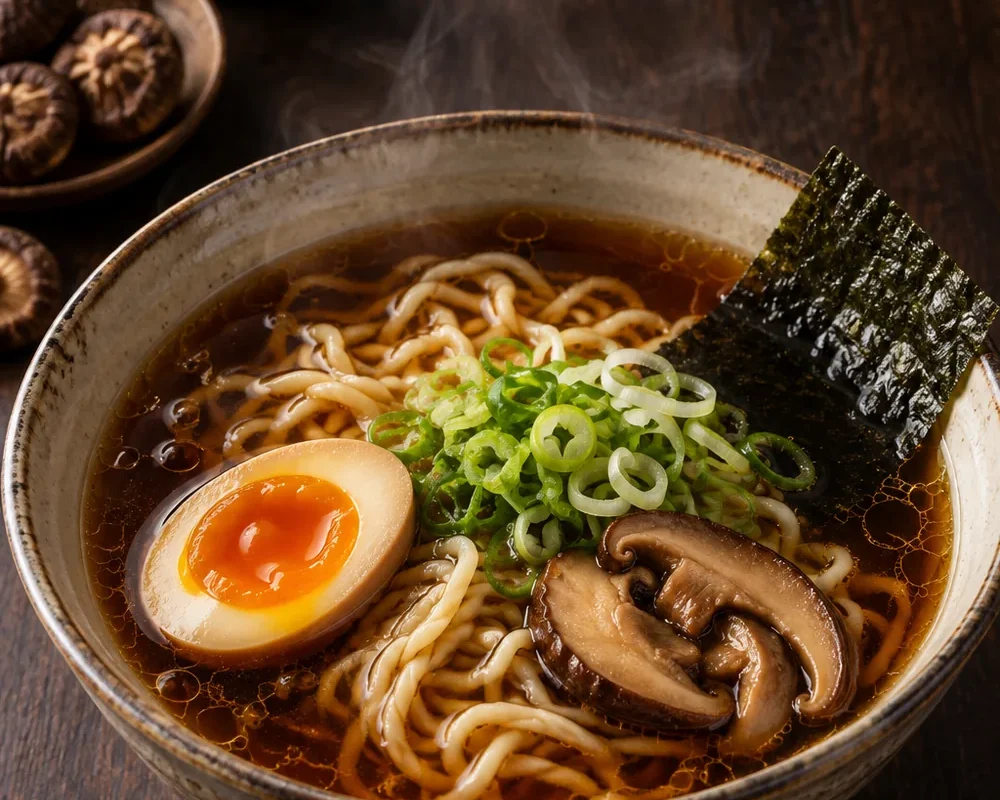
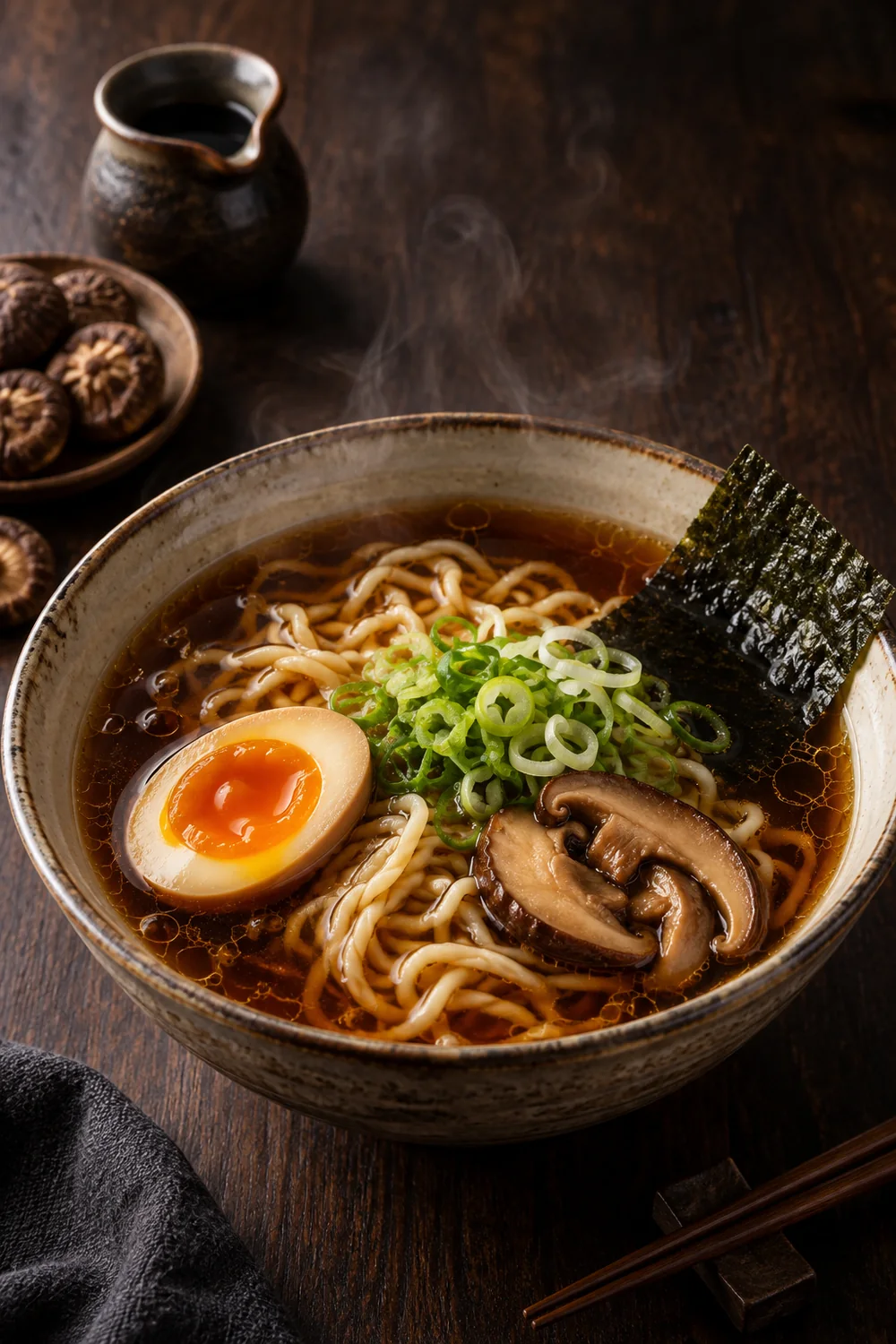
Top with a soft-boiled egg, mushrooms, spring onion and nori.
Serve with spinach, pak choi, sweetcorn, cooked chicken or tofu according to preference.
Storage & reheating
Cool the strained broth and tare promptly in separate shallow containers and refrigerate within 2 hours. Use within 48 hours or freeze the broth for up to 3 months. Reheat broth once until steaming hot throughout. Cook noodles fresh and store toppings according to their own food-safety requirements.
Keep this recipe
Easy Shoyu Ramen Broth in 30 Minutes
This quick shoyu ramen broth separates the clear chicken-and-kombu soup from the concentrated soy tare and aromatic oil. That modular approach makes every bowl easier to season without over-salting the whole pot.
Prep
15 min
Cook
30 min
Total
45 min
Servings
4 ramen bowls
Difficulty
Easy
Course
Soup, Dinner
Cuisine
Japanese-inspired
Diet
Dairy Free
Ingredients
Instructions
Notes
Do not salt the entire broth before adding tare.
Remove kombu before boiling.
Keep the broth at a gentle simmer for a clear result.
Cook noodles separately and drain thoroughly.
Season one bowl first, then adjust the tare amount for the remaining bowls.
Storage & safety
Cool the strained broth and tare promptly in separate shallow containers and refrigerate within 2 hours. Use within 48 hours or freeze the broth for up to 3 months. Reheat broth once until steaming hot throughout. Cook noodles fresh and store toppings according to their own food-safety requirements.
Nutrition estimate
Nutrition has not been calculated for this recipe.
Balance matters more than one secret ingredient. Use a flavourful but low-salt broth, concentrated tare and a small amount of aromatic oil, then adjust each bowl.
What is shoyu ramen broth?
Shoyu means soy sauce. In this recipe, a soy-based tare seasons the broth in each serving bowl.
Can I boil kombu?
Remove it as the stock approaches a simmer. A prolonged hard boil can make kombu taste harsh and change the broth texture.
Can I use stock cubes?
Yes, but choose a low-salt version and start with less tare because cube strength varies.
Can I freeze ramen broth?
Yes. Freeze the strained, cooled broth without noodles or toppings and keep the tare separate.
Sophie Bennett shares practical recipes and meal-planning ideas for Saucy Recipe. Each recipe displays its recorded testing and editorial status so readers can understand what has—and has not—been verified.
May we use statistics services to understand which recipes and tools are useful? Pantry entries, grocery text, private notes, and email addresses are never included in measurement events.



 1
 2
 3
 4