These buttery Yukon Gold mashed potatoes get mellow flavor from a whole head of roasted garlic and stay creamy with warm milk, cream and sour cream. Make them ahead, then reheat gently while the rest of Thanksgiving dinner comes together.
Boil Yukon Gold potatoes until completely tender, dry them briefly in the hot pot, rice or mash them, then fold in warm butter and dairy. Refrigerate up to two days and reheat covered at 325°F with extra milk and butter until the center reaches 165°F.
Make-ahead mashed potatoes solve one of the hardest Thanksgiving timing problems: the potatoes are finished before the turkey rests and the gravy needs attention. Yukon Golds, roasted garlic and warm dairy keep this batch rich and supple.
How to avoid gluey potatoes
Start the chunks in cold water, cook until fully tender, then dry them briefly in the hot pot. A ricer or hand masher handles the texture gently; folding in warm butter and dairy prevents the heavy, elastic result that comes from a blender or too much mixing.
Reheat without drying out
Spread the finished potatoes in a buttered baking dish, refrigerate up to two days, then add a little milk and butter before reheating covered. Stir once and stop when the center reaches 165°F.
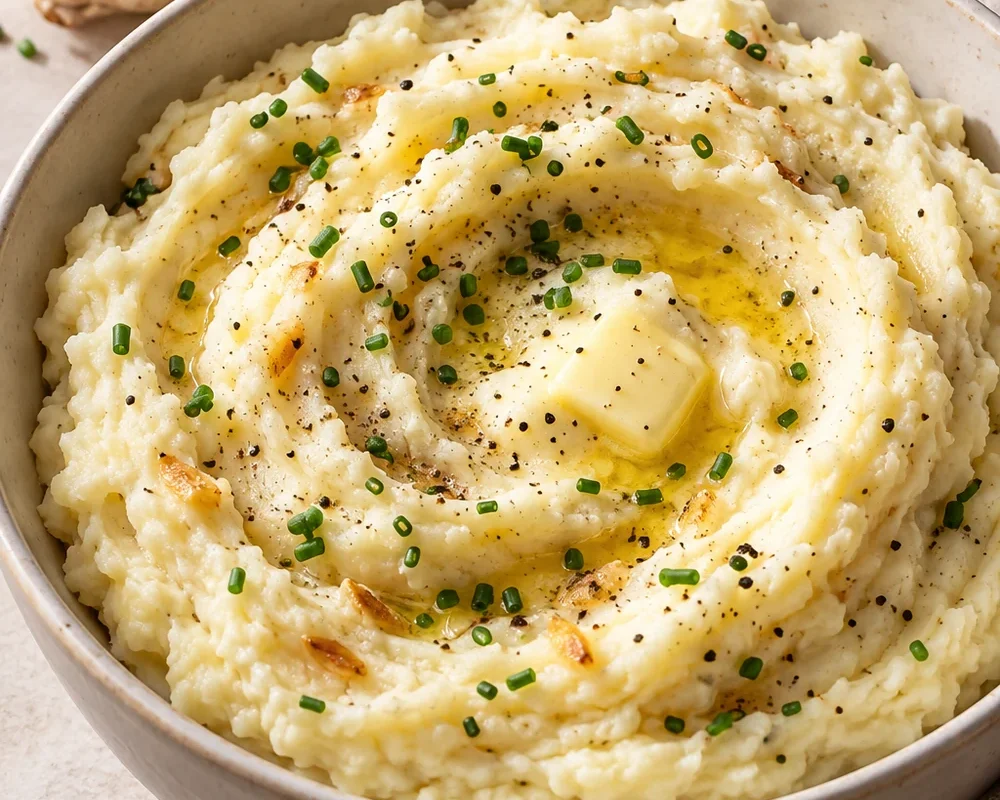
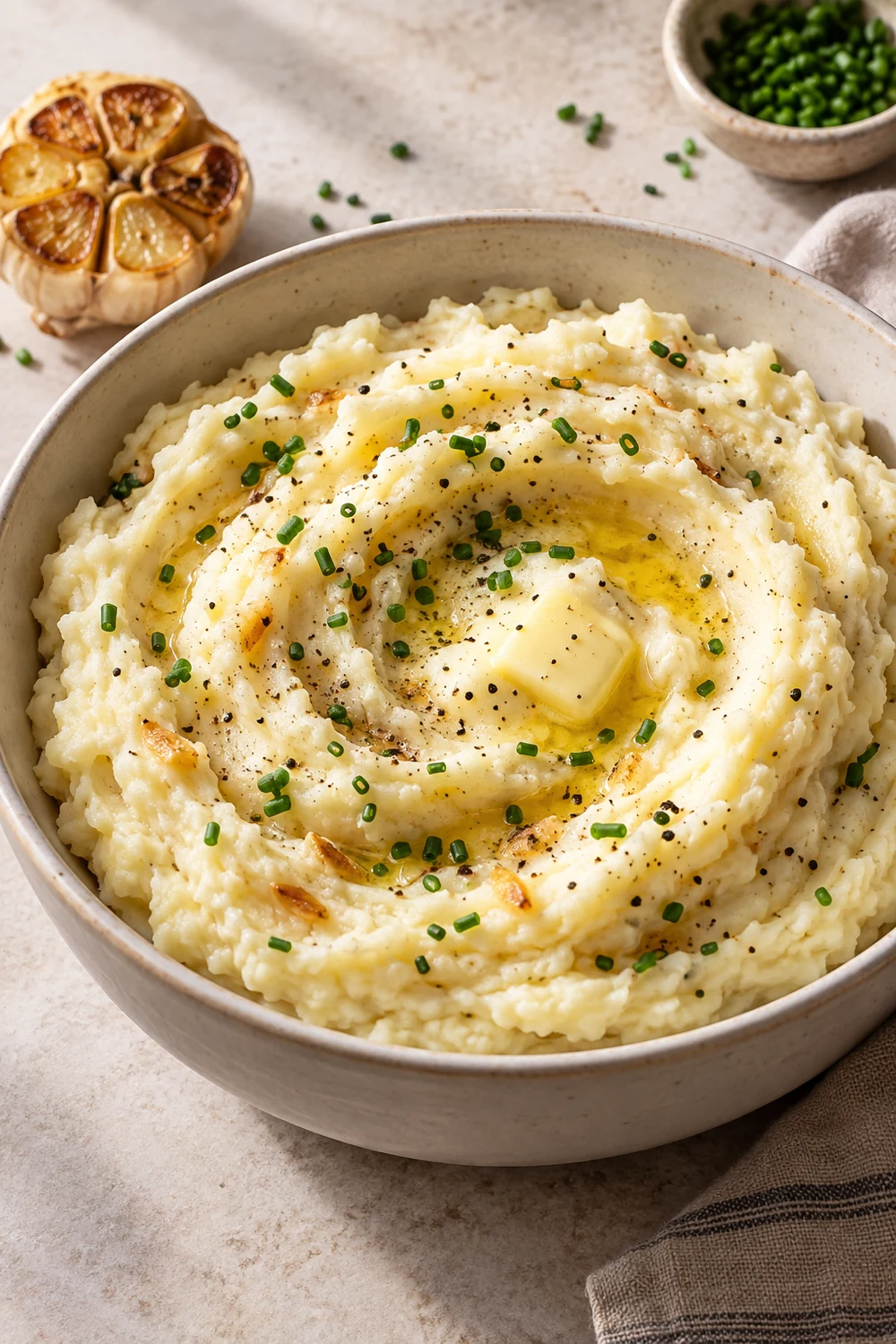
Editorial image note: The finished-dish visual on this page was created with generative AI and is not documentary cook-test evidence.
Why you’ll love this recipe
The full batch can be prepared up to two days ahead.
Yukon Gold potatoes provide a naturally buttery color and texture.
Roasted garlic adds mellow flavor without the sharpness of raw garlic.
Warm dairy and minimal mixing help prevent gluey potatoes.
Oven and slow-cooker guidance free the stovetop at serving time.
Ingredients
Check off each ingredient as you get it ready.
Ingredient notes
Yukon Gold potatoes need less added liquid than russets and have a naturally rich texture. Full-fat sour cream helps the potatoes stay supple after chilling. Warm—not boiling—milk and cream blend more evenly into hot potatoes.
How to make it
Heat the oven to 400°F. Slice 1/4 inch from the top of the garlic head to expose the cloves. Drizzle with olive oil, wrap in foil and roast for 40–50 minutes, until soft and golden. Cool enough to handle, then squeeze the cloves into a small bowl and mash smooth.
Put the potato chunks in a large pot and cover with cold water by 1 inch. Add 1 tablespoon kosher salt. Bring to a boil, reduce to a steady simmer and cook for 15–20 minutes, until a knife slides through the largest pieces without resistance.
Drain thoroughly and return the potatoes to the hot pot over low heat. Shake and stir gently for 1–2 minutes, until visible steam decreases and the surfaces look dry. Remove from the heat.
Meanwhile, warm 8 tablespoons butter, the milk and cream in a small saucepan over low heat until the butter melts. Do not boil.
Pass the hot potatoes through a ricer into the pot, or mash with a hand masher until no large lumps remain. Do not use a blender or food processor.
Fold in the warm butter mixture in three additions. Fold in the roasted garlic, sour cream, 2 teaspoons salt and black pepper just until smooth. Taste and adjust salt.
For immediate serving, transfer to a warm dish, top with the remaining 2 tablespoons butter and chives, and serve.
For make-ahead serving, spread the potatoes in a buttered 3-quart baking dish. Dot with the remaining butter, cool promptly, cover and refrigerate for up to 2 days.
To reheat, remove the dish from the refrigerator while the oven heats to 325°F. Drizzle 1/3 cup milk around the edges, cover tightly with foil and bake for 35–50 minutes, stirring once, until creamy and 165°F at the center. Add another splash of warm milk if needed.
Pro tips
Start potatoes in cold water so the centers and exteriors cook at the same rate.
Dry the drained potatoes in the hot pot; surface water makes the mash heavy.
Add butter and dairy while both the potatoes and liquid are warm.
Fold rather than beat; excess agitation releases starch and creates a gluey texture.
Season after the dairy is added.
Variations & substitutions
Plain version: Omit the roasted garlic and increase black pepper to taste.
Herb version: Fold in 1 tablespoon chopped parsley and 1 teaspoon chopped thyme with the chives.
Russet blend: Replace up to half the Yukon Gold potatoes with russets for a fluffier texture.
Parmesan finish: Fold in 1/2 cup finely grated Parmesan off the heat and reduce salt after tasting.
What to serve with it
Serve with turkey gravy, green bean casserole and cranberry sauce.
Use a wide, shallow serving bowl so the butter remains visible and the potatoes are easy to portion.
Storage & reheating
Refrigerate promptly in shallow covered containers and use within 3–4 days. Reheat to 165°F. For slow-cooker holding, keep the freshly prepared potatoes hot on the warm setting for no more than 2 hours, stirring occasionally and confirming the appliance maintains a safe hot-holding temperature.
Keep this recipe
Make-Ahead Roasted Garlic Mashed Potatoes
These buttery Yukon Gold mashed potatoes get mellow flavor from a whole head of roasted garlic and stay creamy with warm milk, cream and sour cream. Make them ahead, then reheat gently while the rest of Thanksgiving dinner comes together.
Prep
25 min
Cook
50 min
Total
1 hr 20 min
Servings
12 side-dish servings
Difficulty
Easy
Course
Side Dish
Cuisine
American
Ingredients
Instructions
Notes
Start potatoes in cold water so the centers and exteriors cook at the same rate.
Dry the drained potatoes in the hot pot; surface water makes the mash heavy.
Add butter and dairy while both the potatoes and liquid are warm.
Fold rather than beat; excess agitation releases starch and creates a gluey texture.
Season after the dairy is added.
Storage & safety
Refrigerate promptly in shallow covered containers and use within 3–4 days. Reheat to 165°F. For slow-cooker holding, keep the freshly prepared potatoes hot on the warm setting for no more than 2 hours, stirring occasionally and confirming the appliance maintains a safe hot-holding temperature.
Nutrition estimate
Nutrition has not been calculated for this recipe.
Sophie Bennett shares practical recipes and meal-planning ideas for Saucy Recipe. Each recipe displays its recorded testing and editorial status so readers can understand what has—and has not—been verified.
May we use statistics services to understand which recipes and tools are useful? Pantry entries, grocery text, private notes, and email addresses are never included in measurement events.


 1
1
 2
2
 3
3
 4
4