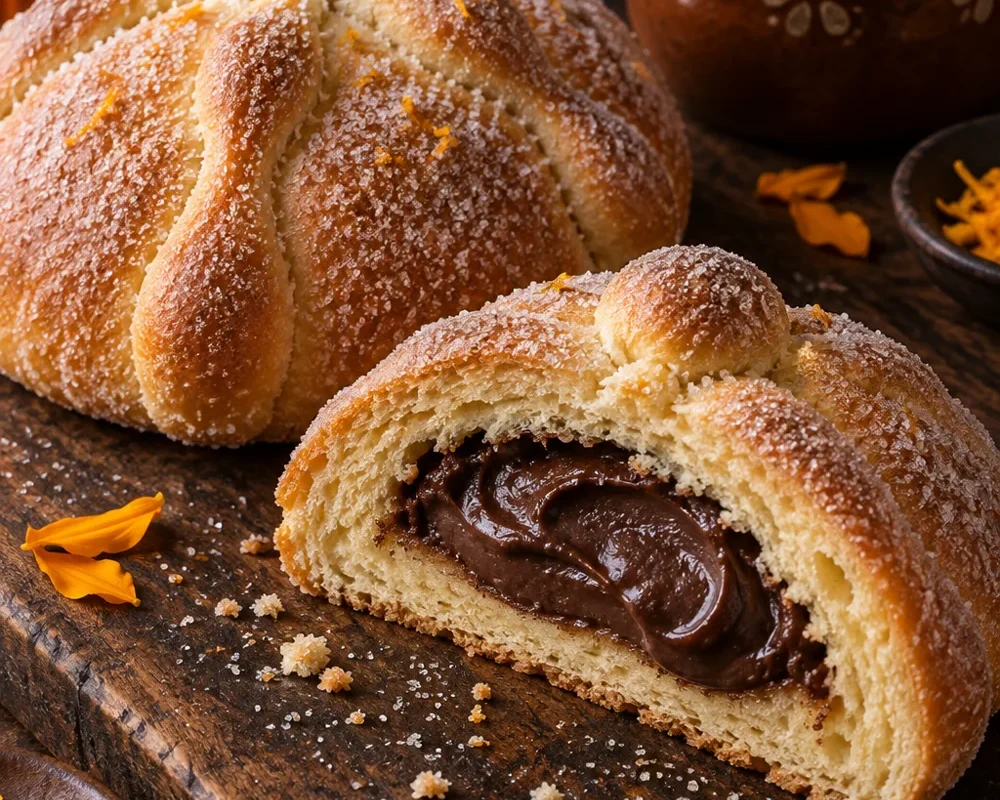
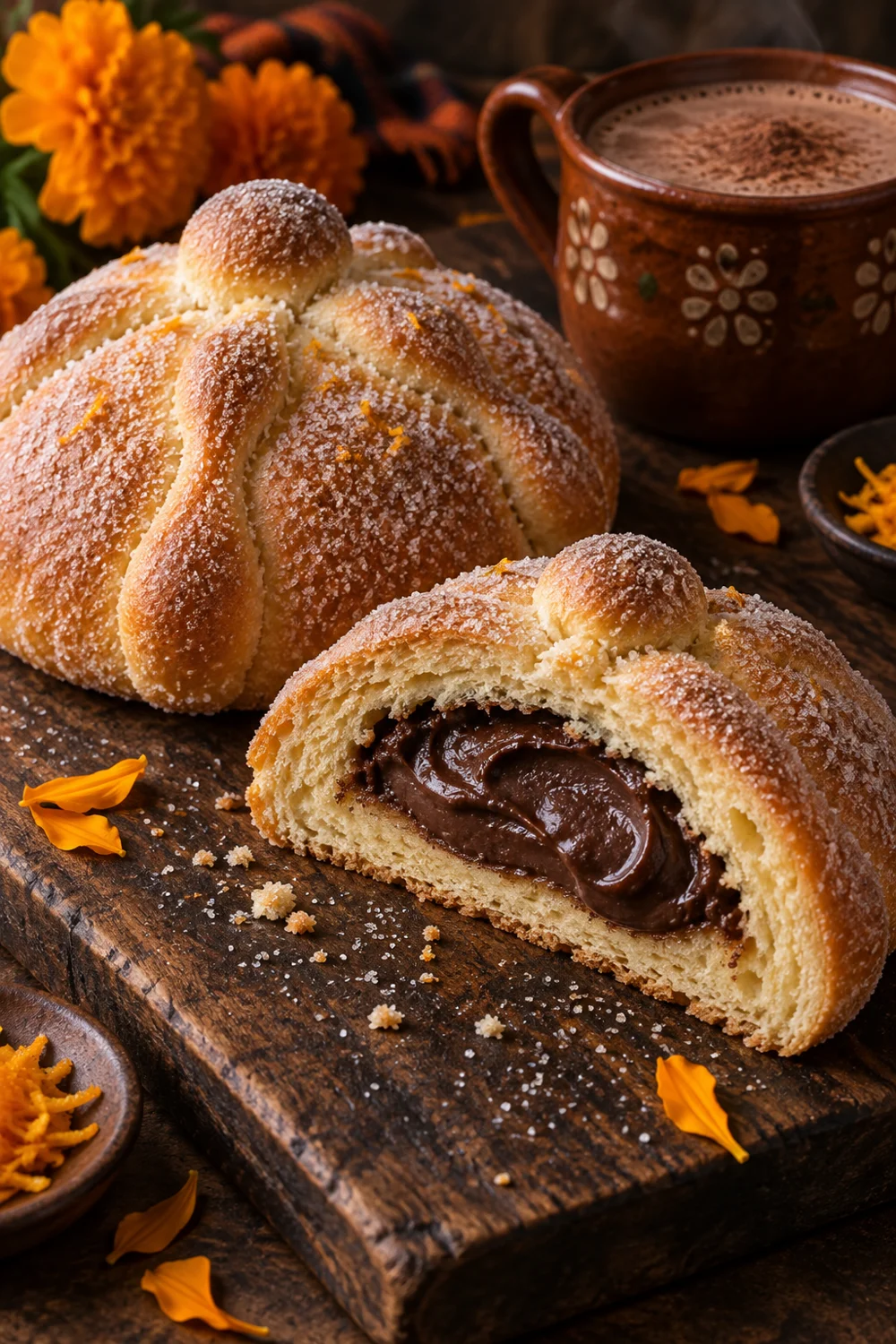
This chocolate-filled pan de muerto keeps the bread’s orange-scented enriched dough, crossed bone-shaped decoration and sugar finish, then adds dark chocolate pastry cream as a contemporary filled variation.
Knead an orange-scented enriched dough until elastic, let it rise, shape six buns with crossed bone decorations, proof again and bake at 350°F. Cool completely, then split and fill with chilled dark chocolate pastry cream before coating with butter and sugar.
Pan de muerto is closely associated with Día de Muertos in Mexico. Regional styles and family traditions vary, but the familiar central-Mexican form is an enriched round loaf decorated with crossed strips of dough that evoke bones and a small centre piece. This recipe keeps those recognisable features and adds chocolate pastry cream as a contemporary pan de muerto relleno variation.
The enriched dough needs patient kneading and proofing. Orange zest and optional orange-blossom water perfume the crumb, while filling the cooled buns rather than baking the cream inside preserves both the bread structure and the smooth chocolate texture.
Why you’ll love this recipe
The dough retains the orange fragrance and enriched crumb associated with many pan de muerto styles.
Crossed bone-shaped decorations make the bread immediately recognisable.
Dark chocolate pastry cream gives the trending filled format a balanced, bittersweet centre.
Individual buns are easier to fill and serve than one large loaf.
Weights, dough cues and proofing cues make the method more useful than clock time alone.
Ingredients
Check off each ingredient as you get it ready.
Ingredient notes
Bread flour supports the enriched dough and sculpted decorations.
The milk should feel warm, not hot; excessive heat can damage the yeast.
Add the soft butter gradually only after the dough has begun developing strength.
Orange-blossom water varies in intensity; one teaspoon is intentionally restrained.
Use a 60–70% dark chocolate for a filling that balances the sugar coating.
How to make it
Make the chocolate pastry cream first. Heat the 1 1/2 cups milk in a saucepan until steaming. In a bowl, whisk the egg yolks, 1/3 cup sugar, cornstarch, cinnamon and salt until smooth.
Whisk about one-third of the hot milk into the yolk mixture. Return everything to the saucepan and cook over medium heat, whisking constantly, until thick and bubbling. Continue whisking for 1 minute.
Remove from the heat. Add the chopped chocolate and vanilla; whisk until smooth. Press parchment directly on the surface, cool briefly and refrigerate for at least 3 hours.
For the dough, combine the bread flour, 80 g sugar, yeast and salt in a mixer bowl. Add the warm milk, 2 eggs, egg yolk, orange zest, vanilla and orange-blossom water. Mix on low until a shaggy dough forms.
Knead with the dough hook on medium-low for 5 minutes. Add the 90 g soft butter 1 tablespoon at a time, waiting until each addition is mostly absorbed. Knead 8–12 minutes more, until the dough is glossy, elastic and can stretch into a thin translucent window without tearing immediately.
Transfer to a lightly buttered bowl, cover and let rise in a warm place for 1 1/2–2 hours, until nearly doubled.
Turn out the dough and reserve 120 g for decorations. Divide the remaining dough into 6 equal pieces and shape each into a taut round. Arrange 3 inches apart on two parchment-lined trays.
Divide the reserved dough into 12 small strips and 6 small balls. Roll each strip under spread fingers to form two or three thicker knuckles. Lightly brush the buns with water, cross two strips over each bun and place a ball in the centre.
Cover loosely and proof for 45–75 minutes, until visibly puffy and a light fingertip press springs back slowly. Heat the oven to 350°F (175°C).
Whisk the egg and 1 tablespoon milk. Brush the buns gently. Bake for 20–24 minutes, rotating the trays once, until deep golden and the centre of a bun registers about 190°F (88°C). Cool completely on a rack.
Whisk the cold pastry cream until smooth and transfer it to a piping bag. Split each cooled bun horizontally without cutting all the way through, then pipe in about 1/3 cup filling.
Brush the outside lightly with melted butter and roll or sprinkle with the 1/2 cup sugar. Serve after filling, keeping any extras refrigerated.
Pro tips
Use proofing cues rather than forcing the dough to match an exact minute.
The dough will feel sticky before the butter is fully incorporated; avoid burying it in extra flour.
Cool the buns completely before filling or the pastry cream will soften.
If the bone strips retract while shaping, let them rest for 5 minutes and continue.
Chill the pastry cream with parchment touching its surface to prevent a skin.
Variations & substitutions
Unfilled version: Omit the pastry cream and serve the sugar-coated buns the day they are baked.
Abuelita-style note: Add a very small pinch of ground clove to the chocolate cream.
One large loaf: The baking time and decoration proportions require a separate test, so the current timings apply only to six buns.
What to serve with it
Serve with café de olla, hot chocolate or coffee.
Present on a simple platter that keeps the shaped decorations visible.
For a gathering, fill shortly before serving and keep extra cream chilled.
Storage & reheating
Unfilled, cooled buns are best the day they are baked and may be kept airtight at room temperature for 1 day. Once filled, refrigerate promptly in a covered container and use within 3 days. Do not leave pastry-cream-filled buns at room temperature for more than 2 hours.
Keep this recipe
Chocolate-Filled Pan de Muerto (Pan de Muerto Relleno)
This chocolate-filled pan de muerto keeps the bread’s orange-scented enriched dough, crossed bone-shaped decoration and sugar finish, then adds dark chocolate pastry cream as a contemporary filled variation.
Prep
45 min
Cook
24 min
Total
4 hr 30 min
Servings
6 filled buns
Difficulty
Intermediate
Course
Dessert
Cuisine
Mexican-inspired contemporary variation
Diet
Vegetarian
Ingredients
Instructions
Notes
Use proofing cues rather than forcing the dough to match an exact minute.
The dough will feel sticky before the butter is fully incorporated; avoid burying it in extra flour.
Cool the buns completely before filling or the pastry cream will soften.
If the bone strips retract while shaping, let them rest for 5 minutes and continue.
Chill the pastry cream with parchment touching its surface to prevent a skin.
Storage & safety
Unfilled, cooled buns are best the day they are baked and may be kept airtight at room temperature for 1 day. Once filled, refrigerate promptly in a covered container and use within 3 days. Do not leave pastry-cream-filled buns at room temperature for more than 2 hours.
Nutrition estimate
Nutrition has not been calculated for this recipe.
Check your kitchen first, then tick off what you already have. Copy or print what’s left to buy.
Baking
Pantry
Dairy
Produce
Spices
Use the checklist above as your Saucy Grocery List Helper for this recipe.
Plan your week
Add this recipe to your weekly plan
Best occasion: Día de Muertos baking. Prepare and chill the chocolate pastry cream one day ahead. Bake the buns on the serving day and fill shortly before serving.
Pan de muerto has many regional and family forms. Filled versions are a contemporary variation; this recipe does not claim to replace or define traditional preparations.
What do the decorations represent?
The crossed dough strips are commonly described as bone shapes, with a small centre piece completing the familiar form. Interpretations and local styles vary.
Why is my enriched dough not rising?
The room may be cool, the milk may have been too hot or the yeast may be inactive. Use visible expansion and a slow-springing fingertip test rather than the clock alone.
Can I fill the bread while it is warm?
No. Warm bread can melt and loosen the pastry cream. Cool the buns completely first.
Can I make the pastry cream ahead?
Yes. Refrigerate it with parchment touching the surface and use within 3 days.
Sophie Bennett shares practical recipes and meal-planning ideas for Saucy Recipe. Each recipe displays its recorded testing and editorial status so readers can understand what has—and has not—been verified.
May we use statistics services to understand which recipes and tools are useful? Pantry entries, grocery text, private notes, and email addresses are never included in measurement events.


 1
 2
 3
 4