This stovetop sushi rice recipe balances rice vinegar, sugar and salt while preserving distinct, glossy grains. Rinsing, soaking, resting and gentle slicing prevent a gluey or broken texture.
Rinse Japanese short-grain rice until the water is almost clear, drain and soak it, cook it covered with measured water, then rest it off the heat. Fold warm vinegar seasoning through the hot rice with a slicing motion while fanning, then cover with a damp cloth.
Good sushi rice should hold together without becoming paste-like. The process has four jobs: rinse away loose surface starch, give the grains time to hydrate, cook without repeatedly lifting the lid, and season the rice while it is still hot. This sushi rice recipe uses metric measurements and a stovetop method for UK kitchens, plus visual cues for the glossy finish people search for in the best sushi rice recipe.
Rice-safety note
Serve the rice after preparation. If it will not be used promptly, the UK Food Standards Agency advises cooling cooked rice quickly—ideally within one hour—refrigerating it and using it within 24 hours.
A precise rice-to-water starting point supports repeatable stovetop cooking.
The homemade sushi seasoning can be adjusted without relying on a bottled mix.
Rinsing and a slicing motion reduce gluey, broken grains.
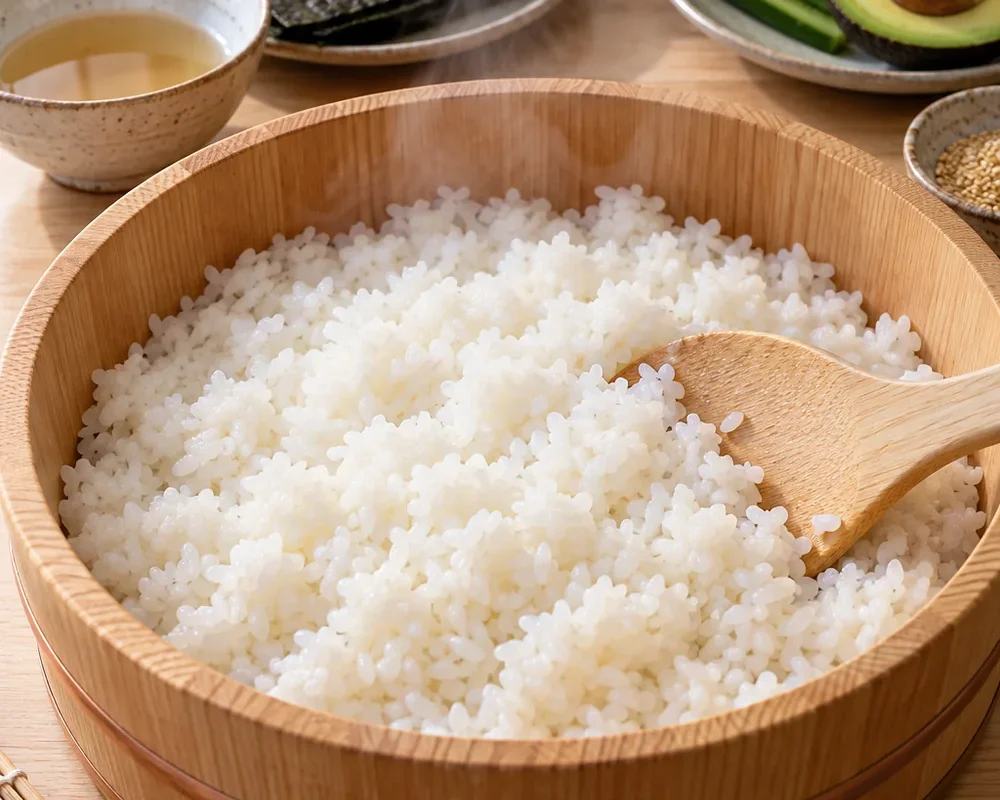
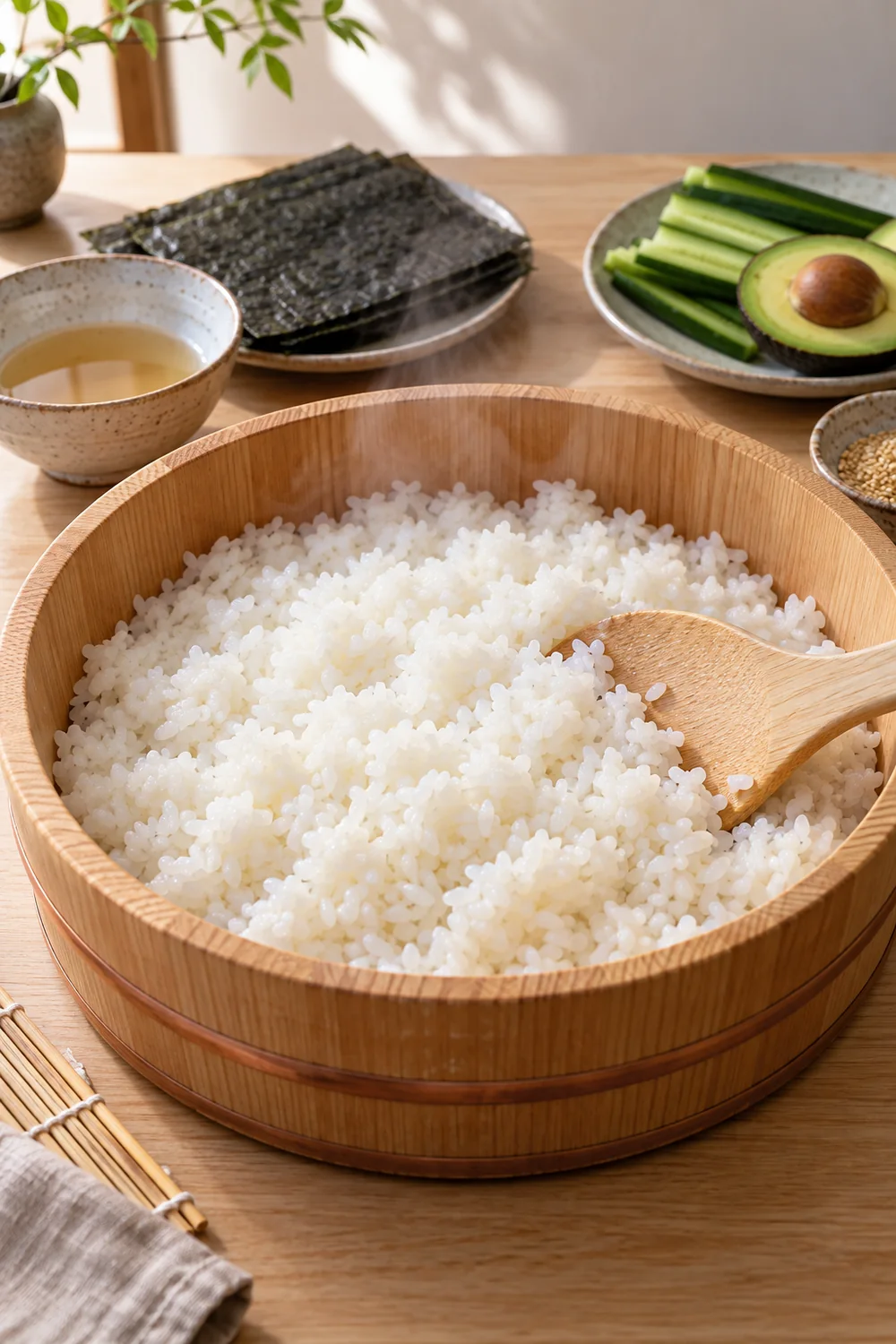
A wide tray works when a traditional wooden hangiri is unavailable.
The recipe includes UK food-safety guidance for cooked rice.
Equipment
Equipment recorded for this recipe.
Fine sieve
Heavy saucepan with tight lid
Small saucepan
Wide bowl or baking tray
Rice paddle or flexible spatula
Hand fan or folded card
Ingredients
Check off each ingredient as you get it ready.
Ingredient notes
Use Japanese short-grain rice rather than jasmine, basmati or glutinous sweet rice.
Choose unseasoned rice vinegar so the sugar and salt remain controllable.
Kombu is optional; wipe it lightly but do not scrub away the pale surface bloom.
Water needs can vary slightly by rice brand and pan, so keep the brand consistent after a successful batch.
How to make it
Put the rice in a bowl, cover with cold water and stir with your fingers for 10 seconds. Drain immediately. Repeat 4–5 times, using fresh water, until the water is only lightly cloudy.
Drain the rice in a fine sieve for 20 minutes.
Put the drained rice, 330 ml cold water and optional kombu in a heavy saucepan with a tight lid. Soak for 20 minutes.
Set the covered pan over medium heat. When steady steam appears, reduce to the lowest heat and cook for 12 minutes without lifting the lid.
Remove from the heat and leave covered for 10 minutes. Meanwhile, warm the vinegar, sugar and salt just until dissolved; do not boil. Cool for a few minutes.
Remove the kombu. Tip the hot rice into a wide wooden bowl, glass dish or baking tray. Drizzle the seasoning evenly over the rice.
Hold a rice paddle or flexible spatula at an angle and slice through the rice, lifting and turning sections gently rather than stirring. Fan the rice as you fold until it looks glossy and is warm rather than steaming.
Cover with a clean damp cloth and use at room temperature for sushi rolls, hand rolls or bowls.
Pro tips
Rinse quickly at first so the grains do not absorb starchy water.
Do not lift the lid while the rice cooks or rests.
Season the rice while both rice and seasoning are warm.
Slice and fold instead of stirring in circles.
Spread the rice widely so steam can escape without drying the grains.
Variations & substitutions
Less sweet: Reduce sugar to 20 g while keeping the vinegar and salt unchanged.
Rice cooker: Use the cooker’s sushi-rice water line, then follow the seasoning and cooling method.
Kombu-free: Omit the kombu without replacing it.
Small batch: Halve every ingredient and use a smaller heavy pan.
What to serve with it
Use for maki rolls, temaki hand rolls, nigiri or chirashi-style bowls.
Pair with cucumber, avocado, cooked prawns, smoked salmon or seasoned tofu according to your dietary needs.
Storage & reheating
Sushi rice has its best texture on the day it is made. Keep it covered with a damp cloth and use promptly. If storing, spread it in a shallow container so it cools quickly, refrigerate within one hour and use within 24 hours in line with Food Standards Agency guidance. Refrigeration makes the grains firmer; do not leave cooked rice warm for extended periods.
Keep this recipe
Sushi Rice Recipe with a Glossy, Seasoned Finish
This stovetop sushi rice recipe balances rice vinegar, sugar and salt while preserving distinct, glossy grains. Rinsing, soaking, resting and gentle slicing prevent a gluey or broken texture.
Prep
25 min
Cook
22 min
Total
1 hr 10 min
Servings
About 650 g seasoned rice, 4 servings
Difficulty
Medium
Course
Side dish
Cuisine
Japanese
Diet
Vegan, Gluten Free
Ingredients
Instructions
Notes
Rinse quickly at first so the grains do not absorb starchy water.
Do not lift the lid while the rice cooks or rests.
Season the rice while both rice and seasoning are warm.
Slice and fold instead of stirring in circles.
Spread the rice widely so steam can escape without drying the grains.
Storage & safety
Sushi rice has its best texture on the day it is made. Keep it covered with a damp cloth and use promptly. If storing, spread it in a shallow container so it cools quickly, refrigerate within one hour and use within 24 hours in line with Food Standards Agency guidance. Refrigeration makes the grains firmer; do not leave cooked rice warm for extended periods.
Nutrition estimate
Nutrition has not been calculated for this recipe.
Sophie Bennett shares practical recipes and meal-planning ideas for Saucy Recipe. Each recipe displays its recorded testing and editorial status so readers can understand what has—and has not—been verified.
May we use statistics services to understand which recipes and tools are useful? Pantry entries, grocery text, private notes, and email addresses are never included in measurement events.



 1
 2
 3
 4