Skip to content
Side Dishes

Crispy Roasted Pumpkin Seeds (Fresh, Shell-On)

Jump to Recipe

Roast fresh shell-on pumpkin seeds with measured oil and salt, a drying guide, regular stirring and a cooled crunch check. Optional smoked paprika finishes this small-batch snack.

Prep
35 min
Cook
30 min
Total
1 hr 15 min
Servings
4 snack portions; estimated yield 1 cup, about 1/4 cup per portion
Difficulty
Easy
Jump to Recipe
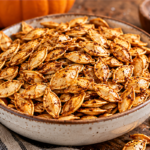
A ceramic bowl piled with golden roasted shell-on pumpkin seeds, with a pumpkin, salt and a few scattered seeds on a wooden table.
Share Tweet Pin It

At a glance

For one cup of cleaned, thoroughly towel-dried shell-on pumpkin seeds, use 2 teaspoons oil and 1/4 teaspoon fine salt. Roast in one layer at 325°F / 160°C for an estimated 20–30 minutes, stirring every 10 minutes. Check a cooled sample; total preparation, drying, roasting and cooling is about 75 minutes.

More Side Dishes recipes

Recipe development note: The owner confirms the supplied photograph shows an actual cooked batch. A test matching this recipe’s exact quantities, drying and roasting times, and finished yield has not been documented. Those values remain estimates; use the preparation and cooled-sample checks below. Nutrition has not been calculated.

Fresh pumpkin seeds can become a simple oven snack with a little oil and salt. Start by removing the orange pulp, drying the shells well and spreading the seeds in one layer. Roast at 325°F / 160°C in a conventional oven, stir during cooking, then cool a few seeds before judging their crunch. This measured version starts with one cup of cleaned, towel-dried, whole shell-on seeds, rather than assuming every pumpkin contains the same amount.

The proposed batch makes about one cup, or four small snack portions. It uses two teaspoons of oil and a quarter teaspoon of fine salt, with smoked paprika added after roasting if you want it. Keep this method for the cream-colored seeds scooped from a fresh pumpkin; green hulled pepitas need their own shorter cooking instructions.

Recipe at a glance

Detail Proposed amount or estimate
Yield About 1 US cup; 4 snack portions of about 1/4 cup each
Active preparation 15 minutes
Additional surface drying 20–30 minutes; extend only as needed to reach the dry-surface cue
Roasting 20–30 minutes, checking earlier for small seeds
Cooling About 10 minutes, until completely cool
Total About 75 minutes; estimated range 65–85 minutes, longer if the seeds remain wet
Oven 325°F / 160°C, conventional; middle rack

Preheat during the drying period. The additional drying and cooling are included in the total, not hidden inside a short “prep time.” Seed size and how thoroughly the shells dry can change the time you need.

Equipment

Use a mixing bowl, a colander or sieve, a spoon, clean kitchen towels, measuring cups and spoons, a rimmed metal baking sheet approximately 13 × 9 inches / 33 × 23 cm, a spatula and an airtight container for cooled seeds. If one cup cannot lie in a single layer on your pan, use a larger pan or divide between two pans. Do not solve crowding by adding more roasting time to a thick mound.

This baseline uses an unlined metal sheet. Dark pans and convection settings can brown differently; test those changes separately instead of assuming the same timing. A kitchen timer helps you remember the stirring checks.

How to clean and dry fresh pumpkin seeds

Wash your hands and use clean utensils and work surfaces. Rinse the outside of the pumpkin under running water before cutting it; do not use soap on the pumpkin. Scrub away surface dirt with a clean produce brush if needed, then dry the outside so it is easier to handle. These preparation steps follow FDA produce guidance; washing does not sterilize produce.

Scoop the seeds and attached pulp into a bowl of cool water. Rub the clumps gently between your fingers to release the seeds, lifting out the loose pulp. Drain in a colander and rinse with cool running water until the thick strands are gone. A little pumpkin staining on the shell is different from a wet clump of flesh.

Spread the drained seeds on a clean towel and blot with a second towel. Separate any remaining clumps. Leave them in one layer while the oven heats, then check the surface: the shells should feel dry rather than slippery, and lifting them should not leave wet patches on the towel. Plan roughly 20–30 minutes for this final drying stage after blotting, but use the surface cue. This is a short preparation step, not an instruction to leave wet seeds and pulp on the counter overnight.

Measure one cup now. Measuring a cup of wet pulp and seeds at the start would give a different batch and too much seasoning once cleaned.

Adjust the batch to the seeds you have

Cleaned, towel-dried seeds Oil Fine salt Pan plan
1/2 cup (120 ml measure) 1 teaspoon (5 ml) 1/8 teaspoon One small rimmed sheet, single layer
1 cup (240 ml measure) 2 teaspoons (10 ml) 1/4 teaspoon One 13 × 9-inch sheet if uncrowded
2 cups (480 ml measure) 4 teaspoons (20 ml) 1/2 teaspoon Two sheets or a sufficiently large sheet, single layer

Optional paprika scales to 1/8, 1/4 or 1/2 teaspoon respectively. Doubling the ingredients does not mean doubling the time. If two trays are used, rotate their positions when stirring and check each separately; the two-tray setup is a variation still needing testing. Roasting separate batches is easier to control in a small oven.

For shopping, buy a pumpkin for its intended meal or fresh carving project rather than promising a fixed seed yield from its size. The base recipe uses small amounts of oil and seasoning, so check your pantry before buying another bottle or jar. The Grocery List Generator can organize your ingredient checklist; review quantities yourself because fresh harvested seed yield is variable.

Substitutions and seasoning choices

Olive oil and a neutral cooking oil are proposed alternatives at the same measured amount. Butter contains water and milk solids and can brown differently, so it is not a like-for-like tested swap here. To make an unsalted batch, omit the salt; do not label it sodium-free without calculating the complete recipe.

Smoked paprika is optional. For a plain batch, leave it out. Add it after roasting as directed so its color does not make early browning harder to judge. Do not add sugar to the base oven method and assume the same timing; sweet coatings can brown faster. A cinnamon-sugar or dill-pickle version needs its own measured formula and test.

Whole winter-squash seeds vary in shell thickness. They may suit the general cleaning-and-roasting approach, but this timing is for a proposed pumpkin-seed batch. Green hulled pepitas are not an interchangeable replacement: they have no cream shell and can toast much faster. Use a pepita-specific recipe instead.

Troubleshooting

Problem Likely cause and next step
Seeds feel soft while hot Cool a few before judging them; hot texture alone is misleading
Seeds are leathery after cooling Surface moisture, remaining pulp, crowding or thick shells; for the current batch, use short additional roasting checks only while it is still lightly colored
Some seeds burn while others stay pale Uneven oven heat, mixed seed sizes or overlapping clumps; stir, rotate the tray and remove individual dark seeds
Seasoning tastes harsh The proposed fine-salt measure may need adjustment for your seed size; reduce it in the next test rather than adding more to the current batch
Shells are too tough to enjoy Seed variety matters; do not keep burning the outside to soften a thick shell. You can crack a cooled shell and eat its kernel if preferred
Seeds soften inside the storage jar They may have been sealed warm or incompletely dried; next time cool fully and check a cooled sample before storage

Extra oil will not dry a wet seed, and a dark color does not prove safety. Discard seeds that smell rancid or show mold; do not try to make spoiled food usable by reheating it.

Serving ideas

Put the cooled seeds in a small bowl so guests can take a modest portion. They also make a crisp topping for a cooked vegetable soup; add them at serving so they do not soak in the soup. Keep shell-on seeds separate from smooth dips and clearly identify what they are.

For a mixed sweet-and-savory fall table, pair a small seed bowl with Caramel Apple Cheesecake Dip and follow that dip’s chilled-serving directions. If you are planning a separate bake, see Homemade Cinnamon Monkey Bread. These are optional companion recipes, not ingredients or proof that either companion was tested with this seed batch.

Recipe sources and method notes

The oven baseline is informed by Utah State University Extension: 325°F, a single layer and regular stirring. University of Minnesota Extension also emphasizes thorough drying and warns that garlic seasoning can burn. FDA produce guidance supports washing hands and rinsing produce under plain running water before cutting. These sources support the method; they do not establish that Saucy Recipe tested this particular batch.

Why you’ll love this recipe

  • Measuring the cleaned seeds keeps the oil and salt in proportion.
  • A single layer and regular stirring help the seeds roast more evenly.
  • Checking a cooled sample helps distinguish hot softness from a leathery finish.

Ingredients

Check off each ingredient as you get it ready.

Ingredient notes

Measure seeds after cleaning and drying. One US cup is a 240 ml volume measure, not an asserted gram weight. This recipe is for cream-colored shell-on seeds, not green hulled pepitas.

How to make it

  1. Prepare the oven and pan. Heat the conventional oven to 325°F / 160°C, with a rack in the middle. Have the clean rimmed pan ready. Finish cleaning, blotting and surface-drying the seeds as described above.

  2. Measure and season. Put 1 cup of cleaned, towel-dried shell-on seeds in a dry bowl. Add 2 teaspoons oil and 1/4 teaspoon fine salt. Toss until the shells have a light, even coating. There should not be a puddle of oil at the bottom of the bowl.

  3. Spread in a single layer. Scrape the coated seeds onto the sheet, including the measured oil from the bowl. Separate overlapping clumps. The seeds can be close together, but should not form a piled second layer.

  4. Roast and stir. Roast for an estimated 20–30 minutes, stirring and redistributing at 10 minutes and again at 20 minutes if continuing. Begin checking small seeds at 15 minutes. Turn the pan around when you stir if one side browns faster. During the final part of roasting, check every 3–5 minutes rather than leaving them unattended until the longest time.

  5. Check a cooled sample. Look for dry shells with light golden patches and a toasted aroma. Remove two or three seeds with a spoon and let them cool on a plate before tasting. A finished sample should feel crisp enough to chew, without a wet or leathery center. Large, thick-shelled seeds may remain firmer than small ones. If the sample is still damp and the tray is not already dark, roast another 3–5 minutes, stir and check again. Treat that as extra time to record, not a promise that every batch finishes at 30 minutes. Dark brown shells, black edges or a bitter smell mean the seeds have gone too far; do not keep cooking to chase more crunch.

  6. Add optional paprika and cool. If using it, toss the warm seeds with 1/4 teaspoon smoked paprika after they leave the oven. Spread them back out and cool completely, roughly 10 minutes, before serving or sealing in a container. Do not trap steam in a jar while the seeds are warm.

Pro tips

  • Timing and yield are estimates; no documented Saucy Recipe kitchen test.
  • Cool a few seeds before judging crunch.
  • Spread in one layer and stir regularly.

Storage & reheating

  • Best served fully cool on the day of roasting. For short make-ahead planning, roast no more than one day before serving, cool completely and seal in a clean airtight container in a cool, dry cupboard. This is a quality-planning suggestion, not a validated shelf-life or safety limit for this untested formula.
  • Refrigerator, freezer and reheating quality have not been verified for this batch. Discard seeds showing mold or a rancid smell; reheating does not make spoiled seeds usable.
Keep this recipe

Crispy Roasted Pumpkin Seeds (Fresh, Shell-On)

Roast fresh shell-on pumpkin seeds with measured oil and salt, a drying guide, regular stirring and a cooled crunch check. Optional smoked paprika finishes this small-batch snack.

A ceramic bowl piled with golden roasted shell-on pumpkin seeds, with a pumpkin, salt and a few scattered seeds on a wooden table.
Prep
35 min
Cook
30 min
Total
1 hr 15 min
Servings
4 snack portions; estimated yield 1 cup, about 1/4 cup per portion
Difficulty
Easy
Course
Snack

Ingredients

Instructions

Notes

Timing and yield are estimates; no documented Saucy Recipe kitchen test.
Cool a few seeds before judging crunch.
Spread in one layer and stir regularly.

Storage & safety

Best served fully cool on the day of roasting. For short make-ahead planning, roast no more than one day before serving, cool completely and seal in a clean airtight container in a cool, dry cupboard. This is a quality-planning suggestion, not a validated shelf-life or safety limit for this untested formula.
Refrigerator, freezer and reheating quality have not been verified for this batch. Discard seeds showing mold or a rancid smell; reheating does not make spoiled seeds usable.

Nutrition estimate

Nutrition has not been calculated for this recipe.

Source: https://saucyrecipe.com/crispy-roasted-pumpkin-seeds/

Shopping checklist & meal planning
Shop smarter

Your grocery list

Check your kitchen first, then tick off what you already have. Copy or print what’s left to buy.

Recipe ingredients

Use the checklist above as your Saucy Grocery List Helper for this recipe.

Plan your week

Add this recipe to your weekly plan

Choose a day that fits your schedule and add this recipe to your plan. Check the grocery list before you shop.

Frequently asked questions

Do I have to boil pumpkin seeds first?

No boiling step is included in this proposed recipe. It uses cleaned, well-dried seeds and a single oven roast. Do not add a boil and then keep the same total time without checking the extra moisture and actual results.

Can I eat the cream-colored shells?

Whole roasted pumpkin-seed shells can be eaten, though some are tougher than others. Let a sample cool and judge whether you enjoy the texture. Green pepitas are the inner kernels, not the same starting ingredient.

Why measure after cleaning and towel-drying?

A cup of seeds mixed with wet pumpkin flesh contains less usable seed than a cup of cleaned seeds. Measuring after preparation keeps the seasoning ratio meaningful even when pumpkins yield different quantities.

Can I use my carved pumpkin's seeds?

Collect seeds from a freshly opened, sound pumpkin at preparation time. Do not use seeds that have sat in an outdoor display or a deteriorating pumpkin. This recipe does not provide a way to sanitize spoiled or contaminated seeds.

How many seeds will one pumpkin give me?

The amount varies. Clean and dry them, measure the actual volume, then use the scaling table. No fixed one-pumpkin yield is promised.

Can I use an air fryer?

Not with an asserted time from this recipe. Basket airflow, small seeds and appliance differences need a separate trial. This guide is written for a conventional oven.

Are these gluten-free or allergy-safe?

The listed plain ingredients do not intentionally add wheat, but purchased seasonings and shared equipment need checking. No certified gluten-free or allergy-safe claim has been verified. Read the labels that apply to your ingredients.

Why are my seeds still chewy at 30 minutes?

Size, retained pulp, surface water and crowding can all change the result. Check a cooled sample and continue in short intervals only if it is still lightly colored. If the shells are thick and already dark, longer roasting is more likely to burn them than solve the texture.

Behind the recipe

About this recipe

Sophie Bennett in a white chef-style jacket in a bright kitchen
Recipe by

Sophie Bennett

Recipe contributor

Sophie Bennett shares practical recipes and meal-planning ideas for Saucy Recipe. Each recipe displays its recorded testing and editorial status so readers can understand what has—and has not—been verified.

More about Sophie Bennett
Written by
Sophie Bennett
Editorial contact
SaucyRecipe Editorial Team
Last checked
Not recorded — editorial review pending
Testing status
Kitchen-test record not available

Nutrition is an estimate and may vary based on ingredients, brands, and portion sizes.

Leave a Reply

Your email address will not be published. Required fields are marked *

Don’t Miss! More to try ..

more ..

Facebook

Recipes, kitchen inspiration and delicious ideas from Saucy Recipe.

Follow Us

Instagram

Recipes, kitchen inspiration and delicious ideas from Saucy Recipe.

Follow Us

Pinterest

Recipes, kitchen inspiration and delicious ideas from Saucy Recipe.

Follow Us

TikTok

Recipes, kitchen inspiration and delicious ideas from Saucy Recipe.

Follow Us